Slide rule workshop D
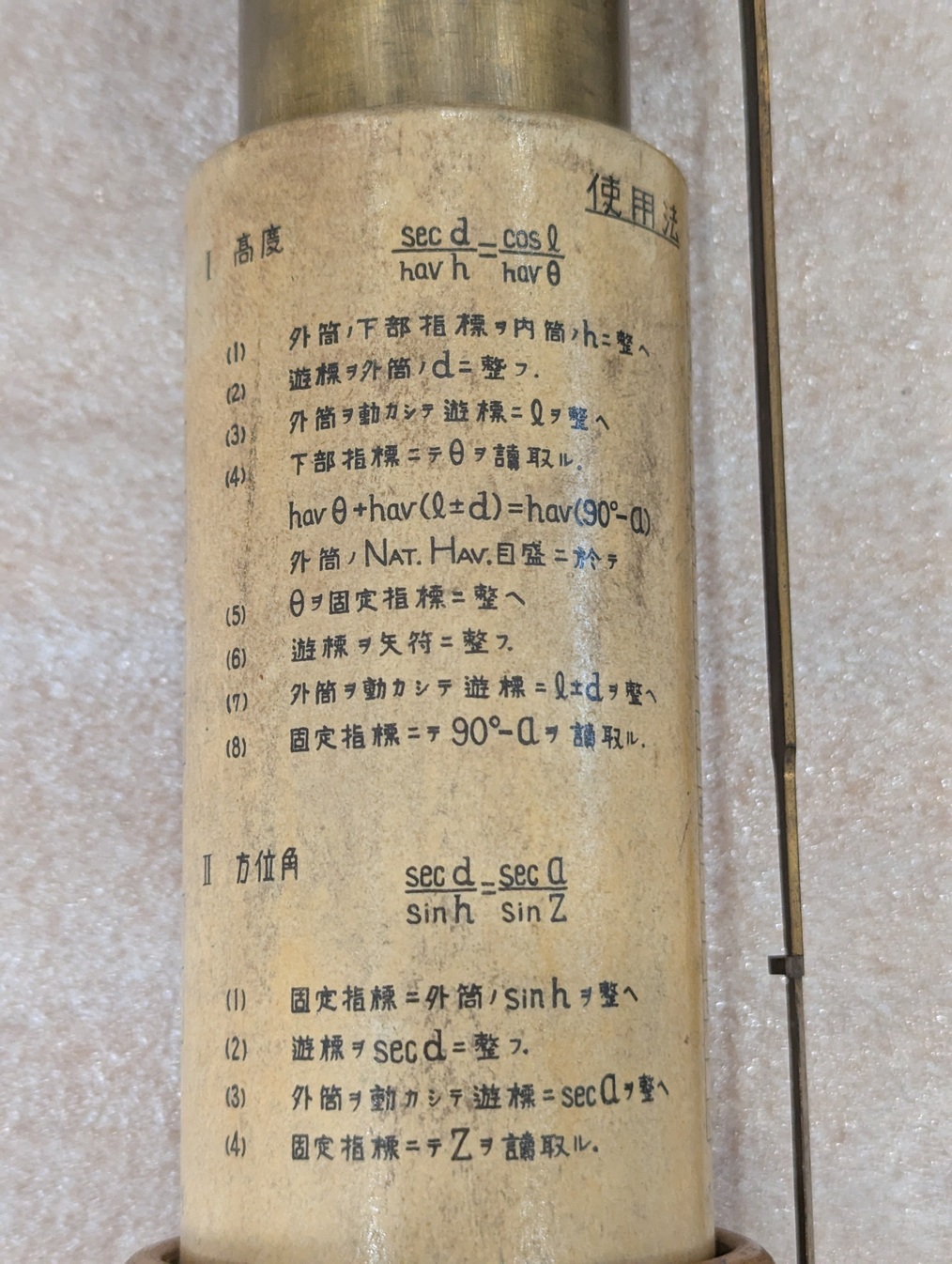
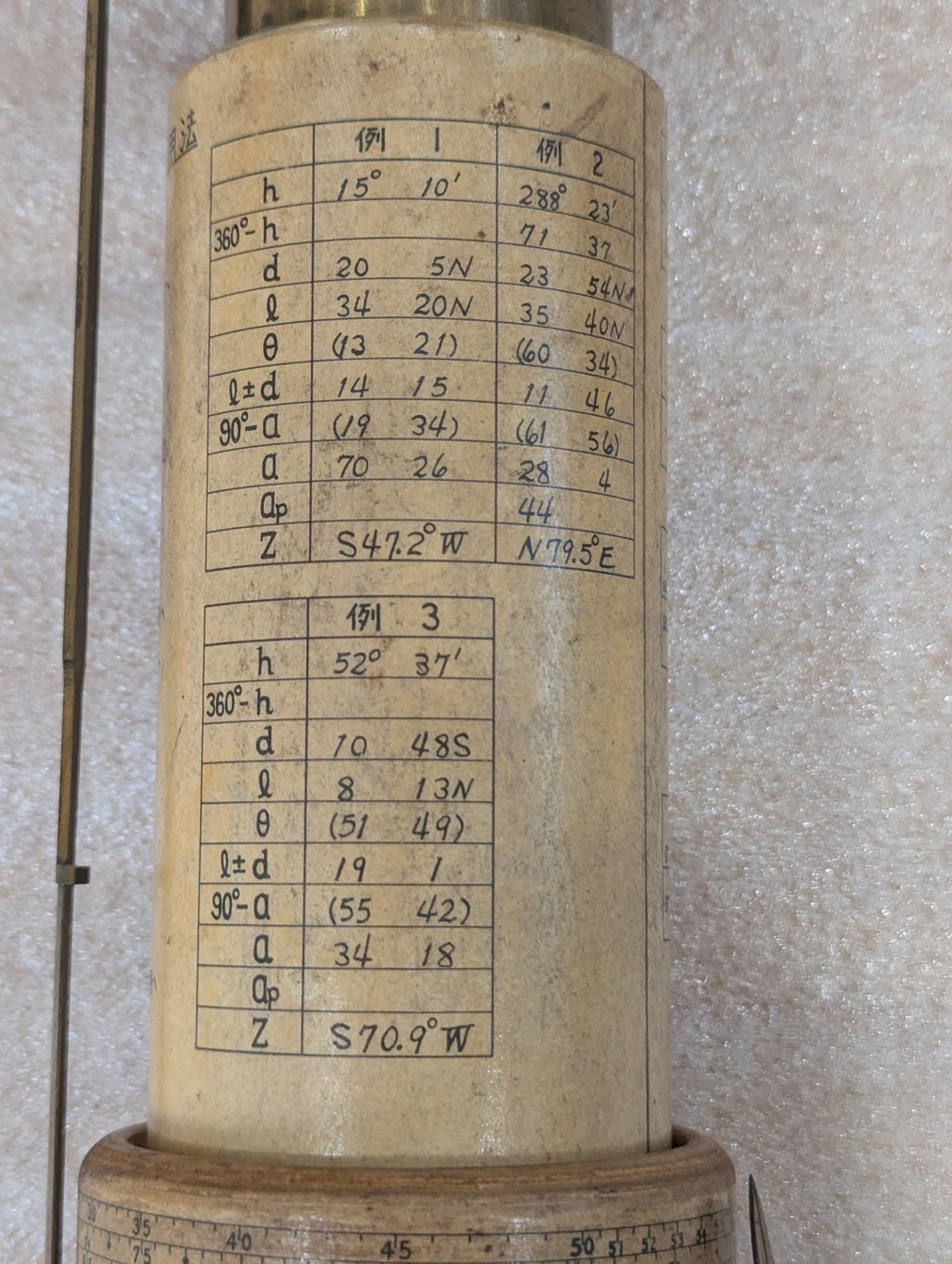
Kawamura Position Line Calculator
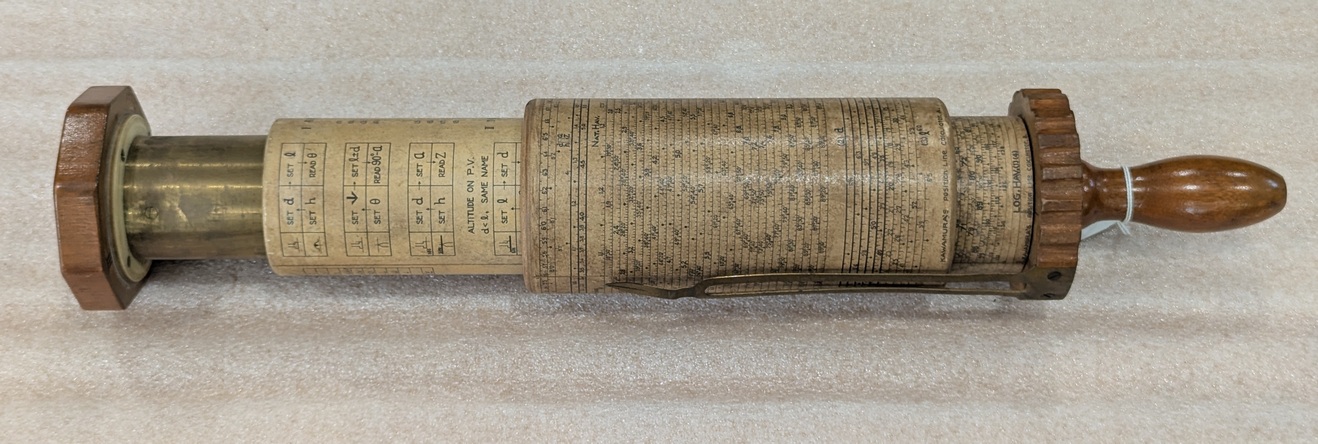
Main and outer cylinders of cardboard.
Inner cylinder brass. Wooden ends and handle.
Single brass pointer attached to handle end, pointer with 2x2 chisel cursors attached to inner cylinder.
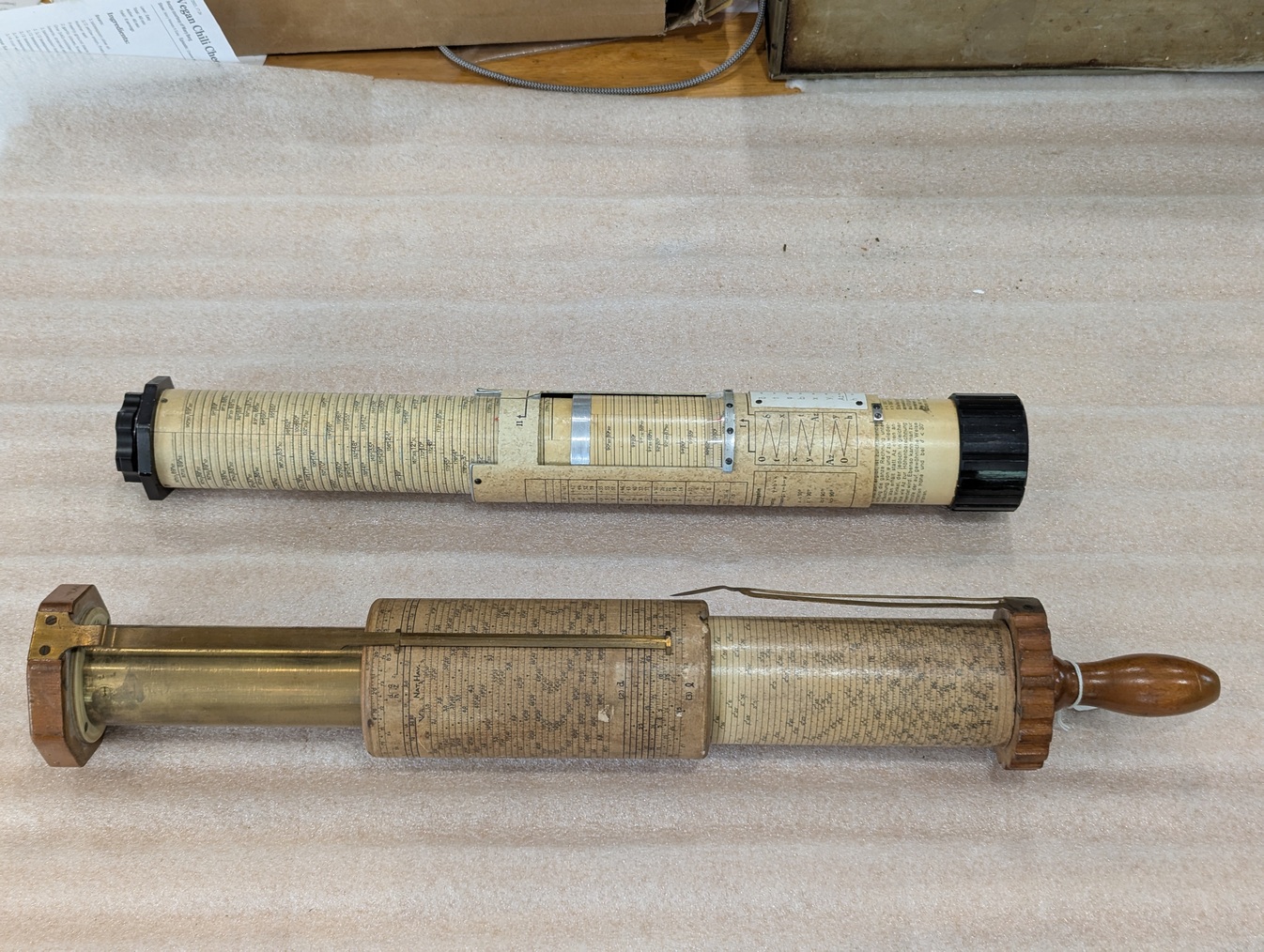
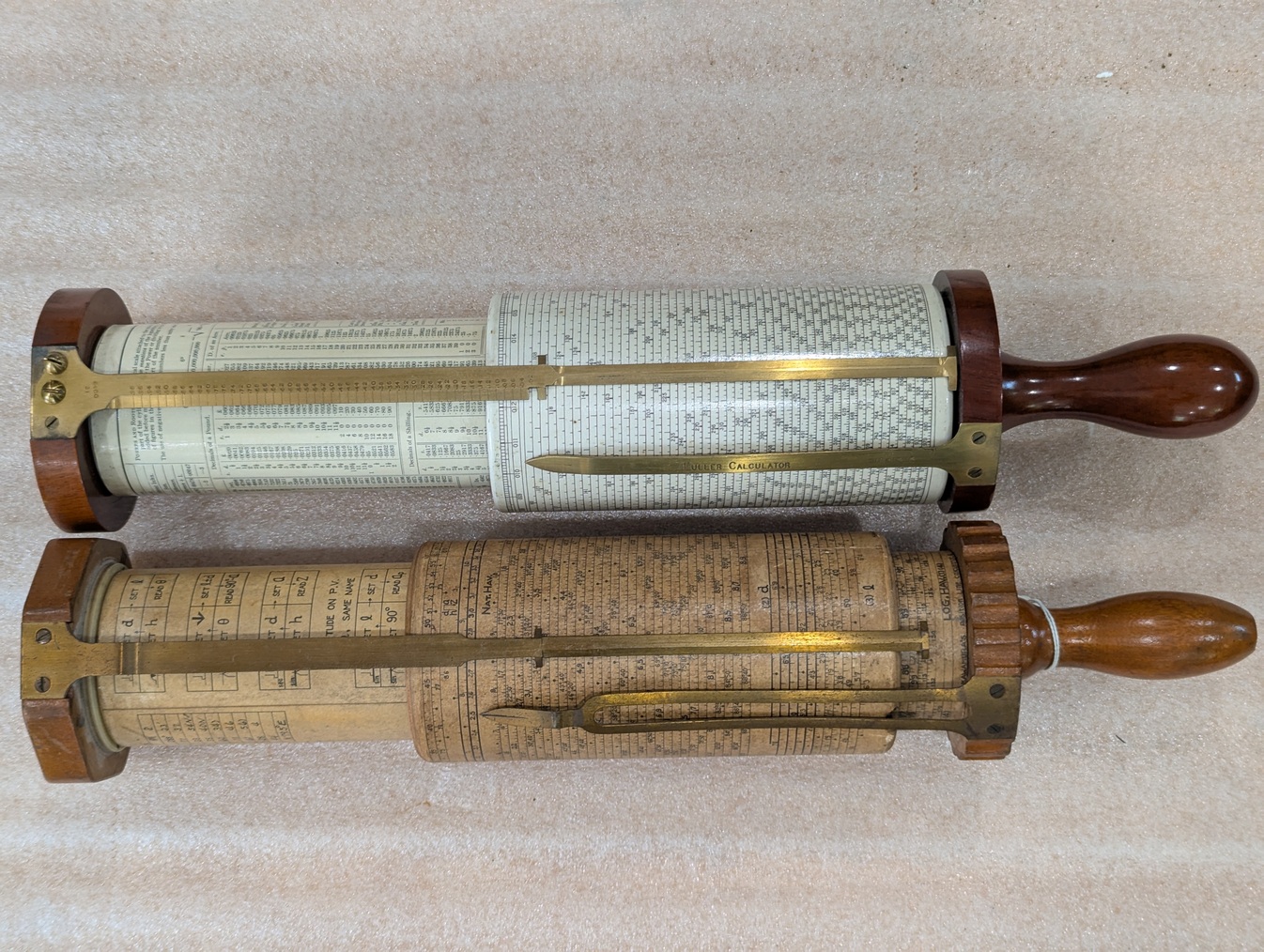
Similar construction to a Fuller Calculator.
On outer cylinder "A":
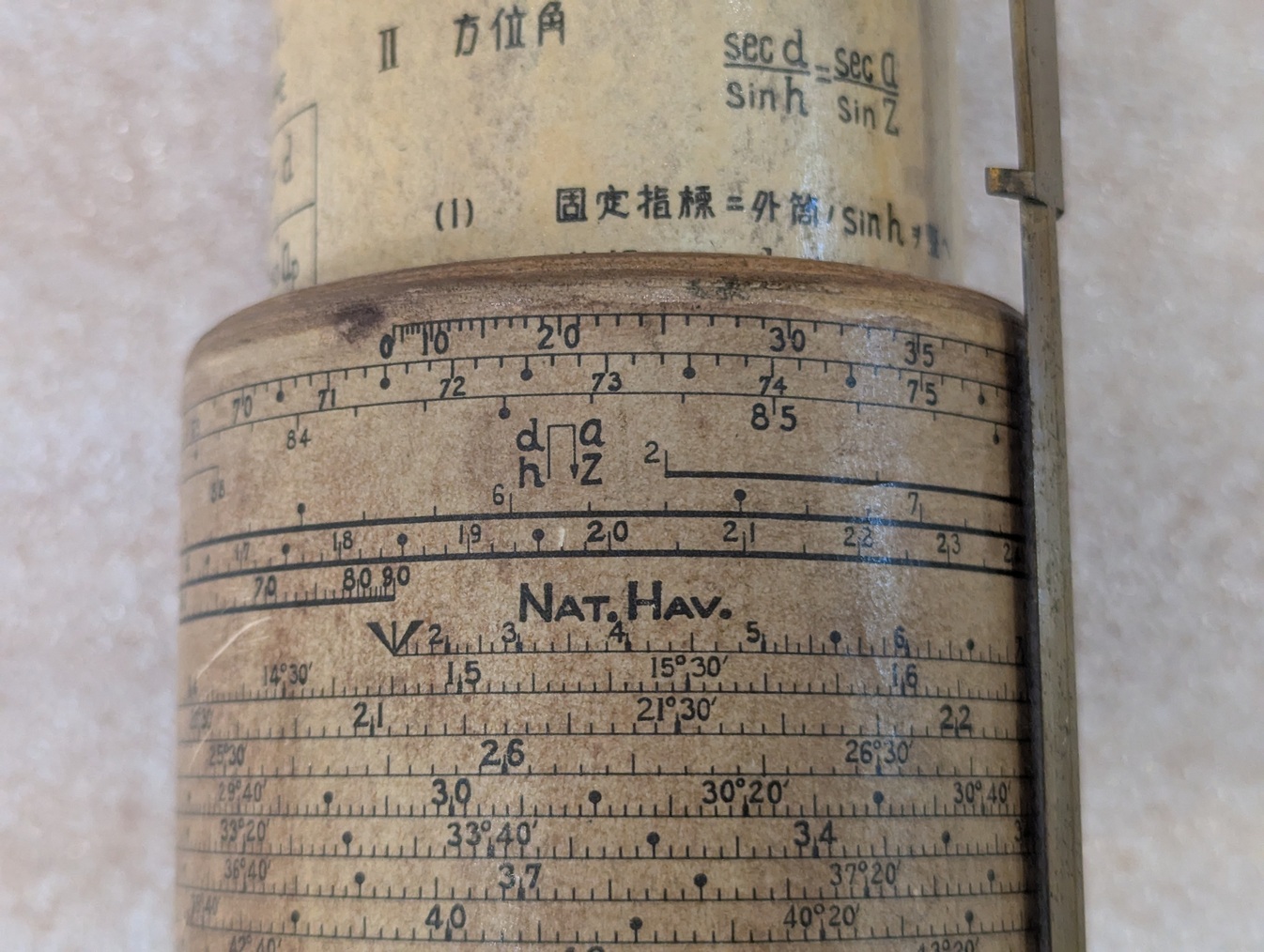
- 2.9-turn helix 0(dense)..88(sparse),
- "h-d-a-Z" diagrams,
- 2.9-turn helix 2(sparse)..90(dense),
- "NAT.HAV" 30-turn helix ↓1°20'(dense)..90(sparse),
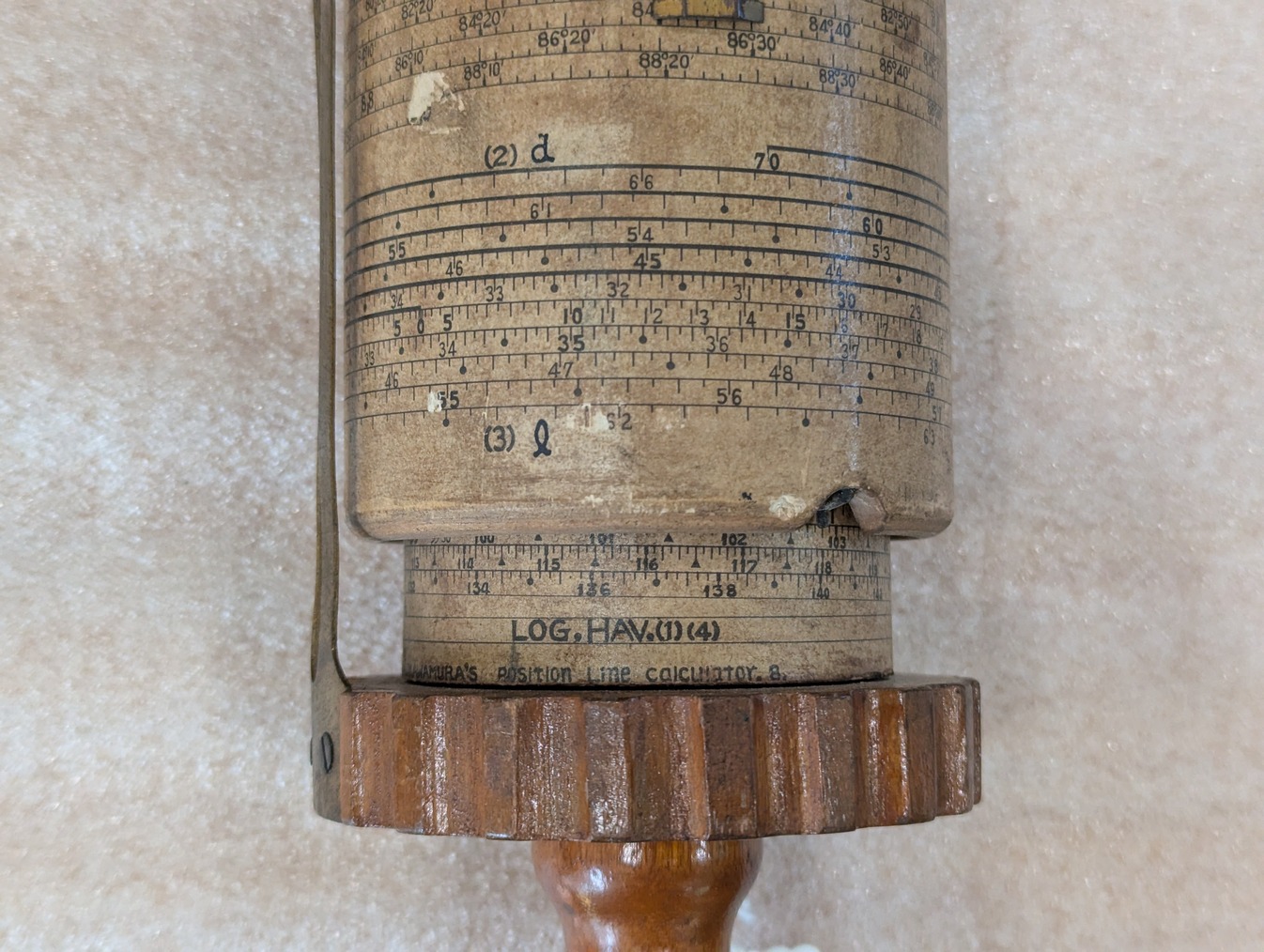
- "(2) d" 5.8-turn helix 70(sparse)..0(dense) joined to 4.7-turn helix 0(dense)..65(sparse) "(3) l"
On main cylinder "B":
- "LOG.HAV.(1)(4)" helix 51-turn 1(sparse)..180(dense)
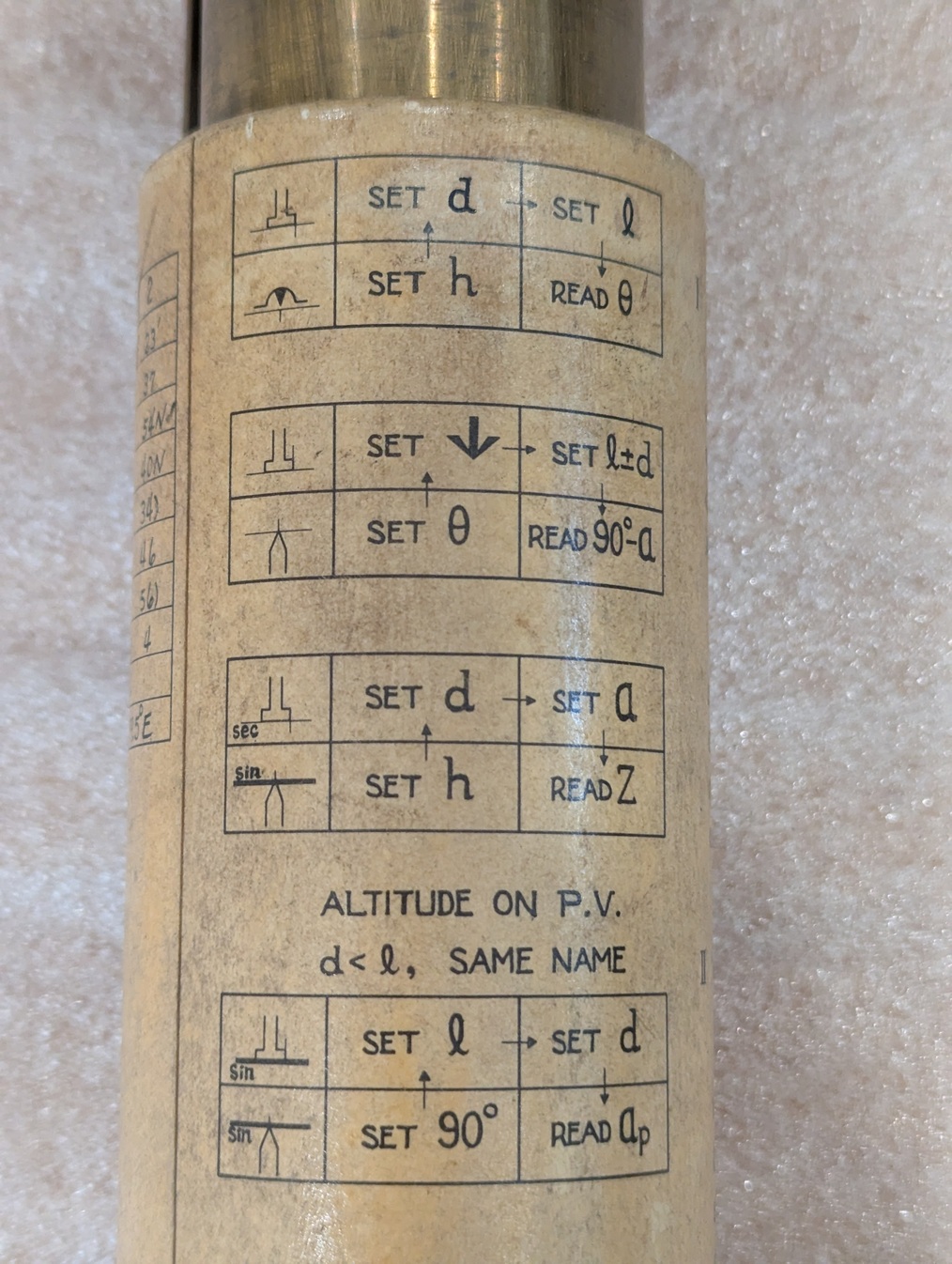
- Instructions: 4 diagrams (English), List of steps for Height and Azimuth(Chinese), 3 examples.
Helixes run down-to-the-right which is opposite to the D&P HR1 Position Line Slide Rule.
(click on the images for magnification)
For comparison, here is Kawamura vs HR1 and Fuller.
A possible clue is that Japanese Hirotada Kawamura had something to do with maps and globes.
David Rance
See also
Ronald van Riet, “Position Line Slide Rules”, 2008
Andries de Man
Emulators: Traditional Bygrave
and
Modern Bygrave
Andries de Man